EXCLUSIVE: HASC chair seeking $450B for defense in reconciliation
House Armed Services Committee Chairman Mike Rogers told Breaking Defense the next NDAA will focus on expanding the defense industrial base.
“We've gotten that input back [from industry] on both the light and the medium variants, and we're analyzing that information right now as we develop an acquisition plan to move forward with acquiring the light and the medium ice breaking capability,” USCG Commandant Adm. Kevin Lunday told lawmakers today.
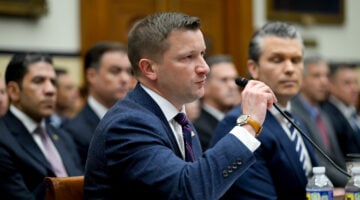
“If we're just sitting on the accounts, and we're waiting on the requirements, we're figuring things out, it's not going to change the service to be the service that America needs," said Sean Plankey, senior advisor on the Coast Guard to the Department of Homeland Security secretary.
Whether another temporary multi-billion-dollar add-on is in the Pentagon's future, Russell Vought attempted to assuage concerns, saying "there will not be a hole" in the defense budget.
The White House intends to use $2.5 billion from the One Big Beautiful Bill plus $1.4 billion from the Navy's shipbuilding budget and $1.4 billion from its research, development, test and evaluation (RDT&E) accounts to cover troop pay and housing needs.
Air Force Chief of Staff nominee Gen. Kenneth Wilsbach also left the fate of the Air Force's wide-ranging "reoptimization" overhaul in the air.
As Congress returns from August recess, Breaking Defense examined how each defense committee is looking at a dozen major programs, from Golden Dome to F/A-XX to the cancellation of the E-7 Wedgetail.
A lawmaker has asked the Air Force about its plans to fund necessary upgrades to the Michigan base, and urged the service to act "swiftly."
Unlike a traditional budget, military funds from the One Big Beautiful Bill come with fewer legal strings attached for how the money is spent, prompting lawmakers to collect public pledges.
The Pentagon has until Aug. 22 to provide its own implementation plan laying out whether it will follow the committees’ recommendations, according to a Congressional notice.
Elaine McCusker and John G. Ferrari of AEI run through some of the most important parts of the reconciliation bill, and what the Pentagon should do now.
For a period of time on Wednesday night, it appeared House Speaker Mike Johnson didn't have the GOP votes needed to move the bill forward.
The bill moved forward in a 51-50 vote that required Vice President JD Vance to make the tiebreaking vote, with Republican Sens. Susan Collins of Maine, Rand Paul of Kentucky, and Thom Tillis of North Carolina opposing the measure.
Selling off the low S-band "is a terrible, horrible, no good, very bad idea," Tom Karako, director of the CSIS Missile Defense Project, told Breaking Defense today.